Showing posts with label grief. Show all posts

Tuesday, March 03, 2026

All my cells thirst


“I’m slipping, I’m slipping away
like sand
slipping through fingers. All
my cells
are open, and all
so thirsty. I ache and swell
in a hundred places, but mostly in the middle of my heart.”

— from Rilke's Book of Hours, I 23, translated by Anita Barrows & Joanna Macy


I found this snippet from Rilke's Book of Hours on a literal snippet of paper tucked between two dictionaries on my study shelf (I was looking for my Esperanto and Klingon dictionaries, if you must know). I have no idea where I came upon it, on the back is a photograph of a caterpillar chrysallis and something about undifferentiated cells. No idea, either, when or why I might have clipped it, nor how it had found its way onto that shelf of rarely consulted references (when was the last time I used Klingon?).

Meanwhile, unknown to me, cells in my substantia nigra were slipping away, like sand through an hourglass. Dying. When were a third of them gone?  a half? I didn't know. I didn't notice, until I did. Most of them are now gone, swept away by whatever molecular cleaning crew keeps station in my midbrain. 

I imagine this little spot in my brain, gradually growing dark. The lights flicking off one by one. Meanwhile all my cells thirst for what was being poured out, longing for the messages that once flowed on a tide of dopamine, but no longer come.

I ache, in my body, in my soul...and in my heart...for what I lost, all unknowing. For what I know I will lose again.


Estimates are that between 60 and 80% of the dopamine producing cells in the brain are dead by the time symptoms of Parkinson's disease manifest. The substantia nigra is just above the brain stem, deep in the middle of your brain. The tissue that comprises the substantia nigra is darker than the rest of the brain's tissue, hence the name.

Rilke's original German has no reference to cells, but speaks instead of senses thirsting in different ways: “Ich habe auf einmal so viele Sinne, die alle anders durstig sind.”

Friday, April 04, 2025

April is the cruelest month


April is the cruellest month, breeding
Lilacs out of the dead land, mixing
Memory and desire, stirring
Dull roots with spring rain...
— TS Eliot “The Waste Land”

This could be one of those posts titled “how it started/how it’s going”.  How it started? A 77oF day, with a glorious blue sky. The cherry tree behind my garage blossomed, and when I looked up from my desk through the open skylight I could see the branches framed, stark against the sky.  Like a James Turrell skyscape. Such tender, ephemeral beauty.

How is it going? A front came through, bringing a deluge of rain. Beating the blossomed trees. Thunder rolled. Lightning made it look like broad daylight. An epic spring storm. Also, I left the skylight open. 


In principle this should not have been a problem. The roof windows are solar powered and have a sensor which detects rain and swiftly closes them. Except when it doesn’t. Which it didn’t. 

I came home from the first night of the parish mission — at which point it had been pouring for more than half an hour — to find water trickling down the wall. And  the bowl I keep on the altar in my prayer space with its (mostly irreplaceable) collection of prayer cards and notes and other spiritual ephemera was also collecting water. 

I hit the close button, took a breath, grabbed a towel from the closet and mopped. Then I picked up the bowl.

I started emptying it, laying the cards and notes out to dry. The beautiful Japanese book of pilgrim stamps that I have collected was dry, but… the cards from friends’ funerals and ordinations. The notes from the kids. Markers had bled. Papers were so soaked there was no way to separate them. I could only wait to see what could be salvaged.

The next afternoon I sat on the floor and sorted. I let go what could not be saved, I spent some time reflecting on the bits of my friends and family’s lives that lived in this liminal holy space. Life and death. Memories stirred by spring rain. I grieved the loss of friends, rejoiced again with others joys - births and marriages and ordinations and professions of their vows. I laughed. I wept.


I washed the bowl and blessed it. And filled it once again, placing it on the altar where it might breed lilacs from the dead and the past.

So how is April going? Well, I am writing this in a 7th floor surgical waiting room in Philadelphia. Math Man is having emergency surgery to repair a detached retina. This is not the first April day I have spent waiting in a hospital for news of a husband in surgery while the world explodes with life. April is a cruel month.


Saturday, December 21, 2024

Ghosts of griefs past

Math Man has come down with COVID (his first bout) and perforce has been banished to his study as the rest of us have tested negative. He is sleeping on the pull out couch in there, like the Earl of Grantham exiled to his dressing room when he and Cora were out of sorts with each other. Meanwhile Crash and his partner are here, Dr. Math Guy is back from THE big state university bearing his brand-spanking new Ph.D. And it would be nice to all hang together, but here we are.

Mystifyingly I have been on the edge of tears most of the day. It’s been a bit of week and I wondered if it was just a post-graduation, post-travel, post-big tea event reaction. Or perhaps the unbloggable work things. As I headed off to church to be shriven before the big feast, it dawned on me. The ghosts of old griefs have come calling. 

I recalled the first Christmas I spent as a widow, everyone at my parents’ bustling about in Christmas mode, and me, still drenched in grief. Off balance without my husband. Trying to hold up for two as one. And here I am again, trying to do all the stuff minus my partner. From the laundry to the groceries to starting up the humidifier. Picking out a Christmas tree and wrapping the gifts. I know how to do this solo balancing act, but like Marley’s ghost its chains rattle noisily. 

Grief is not linear. It ebbs and flows. And even all these years later, its ghosts can still make an appearance.

_______

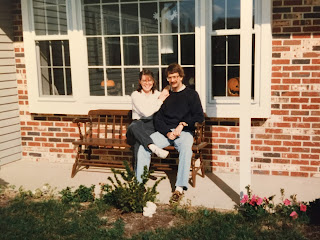
Photo is of a Christmas far in the past.


Saturday, April 20, 2024

Lessons in chemistry


One of the questions I’ve often been asked in the interviews I have done around the tea book has been, “Have you read the book Lessons in Chemistry?” and when I acknowledge that I have, the logical follow up:“What did you think of it?”

The first time the question arose I was surprised, and had to scramble for an answer. I shouldn’t have been. It is a best selling book, it has been made into a series. It has chemistry in the title. The interviewer is fishing for a bridge to what’s in the current cultural zeitgeist. 

But for me the answer is, as the kids say, complicated. Even though the book is set slightly earlier than my time as a graduate student and newly minted scientist, my experiences were not so different from Elizabeth Zott’s. There was enough similarity that it was an uncomfortable read at the start. And then there is the day that Elizabeth‘s partner is suddenly killed. When I was reading the book, it was like a gut punch.  It was as if some enormous hand had picked me up and dumped me back into the confusion and chaos of that April night when Tom died so suddenly. Still, I needed to read to the end. I had to know if Elizabeth made it out of the depths of grief. Truth  be told if I known what the plot was, I wouldn’t have read the book. (I really want something like the website “Does the dog die?” for books. No children in peril, no suddenly grieving widows.)

Of course, to say that I found the book difficult for a very personal reason is not the answer a reporter is looking for. I finally settled on saying that I enjoyed the scenes where Elizabeth gave as good as she got, and that the historical difficulties of being a woman in science inspired me to teach the next generation. True, and truly bland. Next question!

Wednesday, August 16, 2023

Two universes

I started The Impossible Us by Sarah Lotz last night. It's about a couple who meet online but turn out to be living in (slightly) different universes. In another timestream Tom and I would be married 42 years today. A friend who was married a week before we were posted a picture from their wedding a few days ago. In the background was Tom, who had been a groomsman. It was if he had casually dropped into my universe for a second, to say hello.

The story is leaving me to wonder a bit what my life would have been like in that other universe. Would that Michelle be here at the shore this week? Might I run into her on my morning walk, when for a brief second the two universes intersect? Or catch her out of the corner of my eye? 

Saturday, May 13, 2023

Principle and foundation redux


“In everyday life, then, we must hold ourselves in balance before all created gifts insofar as we have a choice and are not bound by some responsibility.   We should not fix our desires on health or sickness, wealth or poverty, success or failure, a long life or a short one.  For everything has the potential of calling forth in us a more loving response to our life forever with God.

Our only desire and our one choice should be this: I want and I choose what better leads to God’s deepening life in me.” — David A. Fleming, S.J.

As much as the Exercises are structured linearly, each week building on the next, ultimately we find ourselves revisiting them out of order in various moments of our lives. It’s Easter season, but I am floundering in the Third Week, scrambling to find my balance.

Ignatius’ First Principle and Foundation animates his Spiritual Exercise. If you have not acceded to this, you are not ready to immerse yourself in the work of the Exercises. I may have accepted the Principle and Foundation long ago, but I cannot say that I have always managed to live in such perfect indifference. It’s a process, it’s the little things. I still do not suffer wet socks well.

Or, it’s not the little things…A few weeks back I woke up with much of the vision in my left eye gone. Light and darkness, color and movement remained, but the world to my left rippled and wavered in a disconcerting way. Shortly I was sitting in a chair in a darkened room as my ophthalmologist ran through a series of possibilities — none of them particularly comforting. When I could not read the letters on the eye chart with my right eye covered, a line from Fleming’s paraphrase of Ignatius flashed through my head: “We should not fix our desires on health or sickness…” I wondered if I had the courage to keep from fixing my desires on sight.  "Pray for the desire for the desire, then," I hear a long ago spiritual director advise.

Within an hour some of the worst diagnoses were off the table, but more tests and a visit to the sub-specialist had to follow before there would be any clarity, metaphorical or literal. I sought the anointing of the sick. I sank into the Gospel stories that wound closer and closer to the Passion. I assiduously avoided the stories in which the blind regained their sight. My sight certainly had not returned.

The specialist had a diagnosis, for which I am grateful. The prognosis is mixed. This will not progress. But I will not entirely regain what I have lost. On the left, I am like the blind man in Mark’s Gospel (Mk 8:22-25), who when only partially healed sees people walking about like trees. The right remains clear. This is the First Principle and Foundation embodied, the two desires compassing me about.

So I struggle to find that indifference, the desire not for any particular path, except that which leaves me closer to God. I find comfort in Rilke, believing that somehow in the ebb and flow of event, God is cutting deeper channels into my soul.

I believe in all that has never yet been spoken.
I want to free what waits within me
so that what no one has dared to wish for 

may for once spring clear
without my contriving. 

If this is arrogant, God, forgive me,
but this is what I need to say.

May what I do flow from me like a river,
no forcing and no holding back,
the way it is with children.
Then in these swelling and ebbing currents,
these deepening tides moving out, returning,

I will sing you as no one ever has,
streaming through widening channels
into the open sea.  -- Rainer Maria Rilke, Book of Hours I, 12


Sunday, February 12, 2023

Leaves of grief

Grief is a funny thing. It can reach out and grab you by the throat from years in the past. Tom has been gone almost 36 years. I have grieved for him. I have found great joy in Math Man and our two sons. Yet somehow the joy and the grief are interleaved with each other, flying past each other like the pages of a book ruffled in the wind. 

Our beloved cat Fluffy died on Friday. She went to sleep on Thursday and simply didn't wake up. The end was swift but gentle, but it remains hard to lose a companion of almost 17 years. Math Man and I cried our tears for her, and did the last necessary things. We will bury her ashes under the cherry tree that she loved to climb,to harass the squirrels and find her way to the window outside my study, demanding I remove the screen and let her in. Terrifying the neighbors as she balanced on the roof, but never once falling. 

I came home from teaching on Friday afternoon and was faced with her food bowl sitting in the kitchen. I emptied her bowls and put them in the dishwasher, and started to clear away the little pieces of her life scattered around the house, washing the bedding in the basket she sometimes occupied in the kitchen and picking up the toys she batted under the sofa. And as I did so the grief and the anger I felt when I came back from the hospital after Tom died came flooding back. I had gone around the house that Good Friday afternoon doing the same thing, throwing away the razor he would not need ever again, washing the bedding and remaking the bed for a single occupant. Suddenly that grief was all fresh again, and I could hardly speak for the tears.

In a moment of clarity, I remembered the advice of a long-ago spiritual director on this kind of grief. Think of it like the Amtrak train howling through the station, he suggested. It comes on fast, it's noisy and rattles you, it's frankly terrifying. But it will pass, and generally quickly. And it did. But I still miss Fluffy...and Tom. 

Saturday, April 16, 2022

Passion, death and resurrection

I went to morning prayer at the parish today, followed by an all hands scramble to unload the flowers and get them out onto the altar for the decorating team coming later. As I headed out afterwards, my heart lifted at the sight of the trees in bloom, the fallen petals from the cherry tree stirring like confetti from a long past parade on the walk, the sounds of the birds. It was a beautiful morning in Bryn Mawr. The air held that spring warmth, just a hint of March’s cold damp still caught in the corners of the stone walls of the church. And just like that I was transported 35 years into the past.

I walked out of the hospital, perhaps around 8. It was a beautiful morning in Bryn Mawr. The air held that spring warmth, with just enough of March’s cold damp to remind you to be grateful that winter’s rigors were past. The birds sang, the trees were aflower, the daffodils across the way were brilliant. Who knew? I’d spent the night in an empty and dimly lit family lounge on the surgical floor and was blinded by all this light and beauty.

It was Holy Thursday, 35 years ago today. On Sunday I had thought I was prepared to wade into the Paschal mystery. Passion, death, and — without a doubt — resurrection. On Wednesday of Holy Week I would discover how woefully unprepared I was to face the Paschal mystery when it was pulled off the pages of scripture and poured out before me. Take this cup, and drink from it.

Tom was thirty. I had just turned 29. Not much older than my sons are now. We’d been married five years, finished our PhDs, moved, got jobs, bought a house, settled into a parish and a neighborhood. It was a very ordinary life, with grass to mow and walls to paint and futures to dream on. But we didn’t know about the bomb inside Tom’s chest. The ballooning artery that would eventually drive a channel into his heart, torn open as he swam laps in the college pool while I sat through the penultimate faculty meeting of the year. 

The Triduum for me would begin with a ride in a ambulance, everything left behind. I would stand by and watch as they resuscitated Tom in the ER. I would make phone calls. I would see that he was anointed with the holy oils. I would talk to him as they prepared him for surgery, though I do not think he could hear me. And I watched and prayed through the night. At 5 am, the surgeon would concede that the damage was beyond repair. At 7 am I would see him wrapped in white sheets, and make the sign of the cross on his forehead with my tears. And walk out of the hospital a few minutes later into that bruisingly beautiful spring day.

So on that Good Friday morning I picked out a casket, flanked by my shell-shocked in-laws and my distraught parents. On Holy Saturday morning I sat with the associate pastor to pick out readings and insist that Easter notwithstanding, there would be no music. No sung alleluia. No alleluia. It was too fast. Three days was not enough time for me to wrap my head around wrenching grief and recognize within it blazing resurrection. I grasp in some small way why the apostles couldn’t believe the women — it was too much of a shift in too little time. I am yet more floored by Mary Magdalene;s ability to see beyond the passion into the resurrection.

There would be a wake on Easter Sunday, a funeral on Easter Monday. Both achingly perfect spring days. Despite all the time that has passed, or perhaps because of it, I can never fail to see the passion and death swirling through the resurrection. It clouds our vision, tests our faith and stretches out our arms between heaven and earth. Like those perfect spring days, where there is still just enough winter lurking in the air to remind you of things unseen.

Sunday, February 20, 2022

A Raw Grief

I have been watching Deep Space Nine, perhaps more accurately, listening to it as I cook and do housework. Today an episode came up where Jake Sisko was an old man, a writer who had given up his writing to do research. The plot revolved around Jake's father, Benjamin, being caught in a time anomaly. Every few years he would pop back into normal time and briefly reveal himself to Jake.

It reminded me of some of the vivid dreams I had after Tom died. I had one recurring dream where we would be walking around on a beautiful day, doing the things we normally did, seeing the people we normally saw. And only he and I knew that he would die at the end of the day. It was an excruciating metaphor for the tension between ordinary life and the extraordinary grief that had come crashing into mine. 

Someone in my twitter feed lost her teenage son in a tragic accident last week. When I saw her post about being unable to sleep, my body remembered those awful months after Tom's death. I also had trouble sleeping, and so, so many dreams. She wrote, too, of the need to get back to work, what else are you going to do? I remember people wanting to relieve me of the ordinary chores, but there were no extraordinary chores that I had to tend to, other than the grief. And this was something I couldn't face all day every day. So I went back to work.

I realize now that the ordinary was not so much a salve for my grief, but a way to titrate it. I was grateful for work that required as much of my attention as I could give it, that gave me a few minutes respite from the all too raw reality. 


Sunday, September 12, 2021

Young widows


9/11/2001. It was  such a beautiful day. Those clear, blue skies that cried autumn, with its new beginnings, an unimpeded line into the future. And suddenly, in the blink of an eye, there were so many young widows. 

In those first days after Tom died,  I remember my mother lamenting her inability to give me any advice to help with what I was going through. (I note my mother was steadfast and wonderful through it all.) She and her friends were still too young, none of them had lost spouses, let alone had children who had. I remember, too, her thought that in other eras, I might have been less alone in such grief. She grew up in the shadow of WW II, which rent young families in so many ways.

I remember walking near John Wayne airport that afternoon — I was stranded in California on a business trip — seeing the planes parked across the runways to block them, and thought of all the times I’d driven past there with Tom when we were at UCI. And thought of the shock that had overturned my life 14 years before. How I could not wrap my mind around what the cardiologist on call was trying to tell me, how desperate I was to have one more chance to tell Tom how much I loved him. How excruciating the wait to know for certain what was coming next. And the avalanche of decisions that would descend. And I thought of all those living rooms and kitchens and offices where this scene was playing again, not in the privacy of a dark hallway in a local hospital, but under the unrelenting glare of a national tragedy. And I prayed for them all.


Sunday, May 23, 2021

Overcome with Paschal Joy


It’s in the Easter season prefaces to the Eucharistic prayer, “Therefore, overcome with paschal joy, every land, every people exults in your praise and even the heavenly Powers…sing together…”

Every time I hear that line I wonder, am I overcome with paschal joy? Are we, here in this church, gathered around this altar overcome with paschal job? What does overcome with paschal joy look like anyway?

Joy is perhaps not the word I would have chosen to characterize this particular spring, shadowed as it was by the pandemic and by familial tragedy. Yet. Still. There it is, a stark declaration, not as a hope, not as something promised to some at some time to come. Here and now, the preface promises, every place and every person, are overcome with paschal joy. So sing.

Novelist Léon Bloy wrote in a letter to his fiancée that joy was the surest sign of the presence of God. (No, that was not Teilhard de Chardin.) Be on the look out for joy, there you are likely to find God. I wonder if it is the opposite that I need at this moment, to first seek out God and perhaps then joy will erupt. Perhaps to be overcome with Paschal joy is to be overcome by God.

There are a profusion of buds on the rose bushes under my back windows. But on this Pentecost day, just a single red bloom. I came out here to pray, to submerge myself in God, and there it is. A single blossom of hope. I’m overcome.

_____________

Photo is of my mother's roses.


Thursday, April 22, 2021

Rose are red, these flowers are not

In the last couple of weeks I have celebrated a birthday, I am currently in my 1,000,0002 turn around the sun and according to my youngest son, not old at all, “You are so spry!” 

Math Man cooked me an amazing steak dinner (he’s been learning to cook) and gave me a beautiful bunch of red roses. I had to chair the parish council meeting right after dinner, so left the roses on the table in their florist’s wrapping to put into a vase later.

Post parish council meeting, I came downstairs, picked up the flowers, walked into the kitchen, looked down and with a start realized the flowers I held were assorted tones of violet. But I was so certain that I’d been given red roses?!? (This is a sentence that cries out for an interrobang.) I looked again, no sign of roses, just the paper wrapped violet bouquet. Math Man was in his own meeting, so I wasn’t going to get an answer there. 

[a hour later]

When I confessed my confusion to Math Man,  he ducked into his study and came back with the bunch of red roses he swapped for the violet ones. April fool! I laughed so hard, and needed that laughter so much.


Wednesday, April 07, 2021

Sorrowing in a season of joy

Though eagerly gathered to hear the miraculous news that was being reported, the disciples were nevertheless terrified when that good news appeared in front of them in all-too-real flesh. What seemed conceivable at one remove —  perhaps it had been a ghost on the road to Emmaus —  was suddenly, shatteringly, staggeringly present. 

I can sympathize with the disciples' confusion, having once spent an Easter morning surrounded by families celebrating in their Easter finery only to spend that same Easter afternoon at a funeral home greeting black-clad mourners at my husband’s wake.  I struggled then to hear Christ’s “Peace be with you,” over the clamor of grief.  I struggled to reconcile joy and sorrow, certainty and uncertainty. I struggle again this Easter,  in the wake of my nephew's murder, to experience Easter as unalloyed joy.

In his book, Into the Silent Land, Martin Laird, OSA, points out that when we go in search of peace in prayer, we often find what feels like chaos. But, he says, it is precisely in this meeting of confusion and peace that healing happens. Not by erasing our pain, but by opening a path for grace. The resurrection did not erase the pain of Christ’s passion, nor does it take away our own travails, as this reflection on Mary's experience captures so evocatively here. Even as I grapple with the paradox of that long ago Easter morning, it exposes as yet unhealed wounds. 

I find in this gospel a space where those of us who are rubbed raw by sorrow in the midst of joy, who are simultaneously mourning and rejoicing, can reach for healing. Stretch out your hands to me, says Jesus, touch my wounds and find a glimmer of peace. For I am here with you, wounded and yet whole, to the end of time.


This is a version of a reflection from Rejoice and Be Glad, Liturgical Press, 2019.

Thursday, April 01, 2021

A body of grief


What follows is about grief, death and violence, suicide. 


Once again I was in a meeting, this time tucked up in my study under the eaves. It is once again Holy Week, once again the evening before Holy Thursday. And once again, someone crooked their finger at me and said come. And just like that, standing in a doorway, the world exploded. 

My brother-in-law was on the phone. My husband choked out that my nephew had been killed, murdered by an intruder, who then killed himself. Then he collapsed into sobs. 

I am surprised by how quickly my body remembers how to grieve. My stomach roils, my appetite vanishes in a blink. I shiver with shock. 

In his poem, “Seven Stanzas at Easter,” John Updike claims that “ if the cells’ dissolution did not reverse, the molecules reknit, the amino acids rekindle” we — the church — have nothing to stand on. But equally the passion must have been held in the body, the pain not kept at arms length, the thirst for air and the failing grasp at consciousness not metaphor, not sidestepped, but a cup to be drunk to the bitter dregs. 

These mysteries we stand at the edge of, for all their transcendence, for all that we cloak them in light and shimmering music and solemn words, ought to find their way into our bodies. We should ache and shiver and weep with a mother who has lost her son. And pray with all our being that the light will overcome the darkness.


Thursday, April 25, 2019

An unimaginable Easter imagined

It's the picture of the single shoe that haunts me. An overturned red shoe on the asphalt, and shattered glass, so much glass, glass like snow on the ground.  I woke on Easter not to photos of Mass at St. Peter's or to small children in their best romping on green lawns with Easter baskets in hand, but to scenes from the bombings in Sri Lanka. To visions of pews scattered about St. Sebastian's sanctuary and its roof blown open. And that one shoe.

Over the last week I've been correcting the proofs for a book of Lenten reflections. The last reflection in the book is not for Lent, but for Easter Sunday, and reads in part.
"Why do I not see everything overset? Why are the pews not scattered like matchsticks, the altar covered in dust from a dome broken open to the sky, a great wind whipping the trees about? And instead of children dressed in their best for Easter brunch, why are there not people milling about in confusion and fear, their clothes torn and shoes unmatched in their haste to come see what happened here last night?"
When I wrote it, I wasn't imagining a disaster, but mulling over this passage from Matthew
And behold, there was a great earthquake; for an angel of the Lord descended from heaven, approached, rolled back the stone, and sat upon it. His appearance was like lightning and his clothing was white as snow. The guards were shaken with fear of him and became like dead men. (Mt 28:2-4) 
Which in turn reminded me of Annie Dillard's essay "An Expedition to the Pole" where she wonders at our inability to grasp the powers at work when we gather for liturgy, to truly grasp the resurrection.
“On the whole, I do not find Christians, outside of the catacombs, sufficiently sensible of conditions. Does anyone have the foggiest idea what sort of power we so blithely invoke? Or, as I suspect, does no one believe a word of it? The churches are children playing on the floor with their chemistry sets, mixing up a batch of TNT to kill a Sunday morning. It is madness to wear ladies’ straw hats and velvet hats to church; we should all be wearing crash helmets. Ushers should issue life preservers and signal flares; they should lash us to our pews. For the sleeping god may wake someday and take offense, or the waking god may draw us out to where we can never return.”
My reflection goes on to imagine a reassuring angel sitting amidst the debris, gently shooing people back out into the world. I imagined it as if a storm had come and gone in the night and while people are bewildered and overset, they are not wounded or dying. Now I indeed see everything overset. I can't get the images of Sri Lanka out of my head, where the pews are scattered like matchsticks and the roof has been broken open so that you can see the sky through it. And that shoe.

I wonder how that reflection will read next Easter. Will we remember those who died this year?


The photos are #29 and #38 in this gallery at the Washington Post.

This reminded me, too, of the attack on a synagogue in Jerusalem and the power of images to drive my prayer.

Saturday, April 06, 2019

When we were young

Several of my siblings have spent hours in the attic of the barn at my parent's house, sorting through boxes of stuff, some of which have been untouched for decades.

Today my brother texted me this photo, taken on a September morning in 1983 in the 5th floor seminar room at UC Irvine. That's me, moments after defending my doctoral dissertation, with a former post-doc from the group who had been a terrific mentor (and who I just had dinner with a couple of weeks ago!). I was 25 — the same age Crash will be on his next birthday.

 I can still remember some of the questions from my defense, it seems not so very long ago.  I still roll up my sleeves when I lecture, still have that silk bow tie in my drawer, though I can't recall the last time I wore it.  My hair is far shorter and grayer, my glasses equally dorky. I can remember the softness of Tom's favorite sweatshirt, tossed on the table while he takes this photo. We had budgeted for a dinner out to celebrate, but by the time we arrived at the restaurant near the South Coast Plaza mall, Tom was feeling ill, and we just went back to the empty apartment, most of our stuff gone on a moving truck to New Jersey.

Things I can't remember - did I use overheads or give a chalk talk? Had I gone to the trouble of making 35 mm slides? Did we drink the champagne right then (it's not even noon as I can see from the clock!)? What was the date?  It's not in my thesis (I checked - there's a copy on the shelf behind my chair).

Less than fours years later, I would be a widow. I would find that sweatshirt tossed on the bed at home, worn to ward off the chill of an early spring morning. I look at these pictures sometimes and wonder, if future me could have warned past me of what awaited her, what would she say? Anything?

Sunday, April 22, 2018

Wild Light: A Eulogy for a Photochemist

My most senior colleague, Frank Mallory, died last fall, and yesterday we gathered at the college's Great Hall to remember his life with music and laughter.  Family, friends, collaborators, fellow musicians met to make music and exchange memories.  He had been at Bryn Mawr for 60 years, 54 of them teaching undergraduates and graduates.  This is what I had to say.


“Somewhere, out at the edges, the night
Is turning and the waves of darkness
Begin to brighten the shore of dawn

The heavy dark falls back to earth
And the freed air goes wild with light.”  — From John O’Donohue’s poem Matins

Light. As a quantum chemist, that is one way I imagine the universe. As primordial darkness gone wild with light, as an infinitely, and infintely varied assembly of Schroedinger’s wave functions. Complex forms which extend out from their centers to infinity.  Molecules. Atoms. Electrons. Nuclei.  In this sense, we are all light.

Perhaps in the same way we can say we are light from light. That light is where we begin, atoms built into molecules into cells into our bodies, and it is our destiny, what we surrender with every breath. It is what we live and move and have our being within.

As a photochemist and an NMR spectroscopist Frank worked in light of all sorts. It was his tool to alter the fabric of the universe, the ultraviolet light that drove the Mallory reaction to so neatly warp one molecule into another.  Radiofrequencies were a tool for exploring the universe, for interrogating atoms, asking who was talking to who, and why.  And ultimately it was  the medium in which he worked.  In the hunt for routes to ever longer ribbons of carbons, Frank gathered atomic wavefunctions into new forms.  Light again from light.

But I don’t want to forget that Frank was light.  Light to a legion of chemistry students — though not literally a legion.  As I write this, I realize that Frank would be tapping at my door to tell me that a Roman legion was 5000 men, and then to tell me how many students — to the student — he had taught. Light brings clarity and Frank brought a precise and clear light to science and to language.

Frank was light to colleagues and friends.  When my husband died, Frank and Sally came to stay with me at the hospital, all through a dark night. They took me home.  Frank was a steady light.

Frank held up a light into the past, he was a bard — a consumate story-teller and a deep repository of lived history of both the college and the field of chemistry.  Thanks to Frank, every time I mention the word “electronegativity” or “Pauling” in Park 180,  I see Linus Pauling stretched out in the front row, drawling, “Mr. Mallory….”

Frank was wild light.  Ask those of us who have been greeted by singing gorillas, or laughed so hard at word games around a dinner table we could hardly breathe, or who kept track of the Flyers by the orientation of the tickets on Frank’s door.

Frank was light. We are light. As light from light, we all bear some of Frank’s light to hand on: students, friends, colleagues and family.

“Somewhere, out at the edges, the night
Is turning and the waves of darkness
Begin to brighten the shore of dawn

The heavy dark falls back to earth
And the freed air goes wild with light.”

I  can think of no better way to wish my friend and photochemist colleague on his way, except to say “May perpetual light shine upon you, Frank.”  May you continue to be wild light.

Thursday, June 15, 2017

Memento mori

The hyacinth is in bloom, the heads already blushing blue. I hadn’t noticed it, perhaps because I hadn’t expected it. It had hardly recovered from the ravages of the winter before last when I had thought it lost.  I mourned it anew this spring when February’s warmth gave way to icy March winds and a damp, dark, chill May.

Weeks ago I brushed my hand along the bare sticks of the hyacinth behind the church, wondering aloud if it, too, was wrecked by these winter vagaries.  Wondering silently what a friend, gone to God after a ravaging spring, would think of these wild swings.  He would say it is chance to taste loss, to know what will be asked of us in those last years, or hours of our life.  He would say there is always hope, even when we don’t notice it, or expect it.

Sunday, April 16, 2017

Ashes and incense

Fragment of press for making bread for Eucharist. Byzantine.
There are little flecks of ash on my alb, from where I brushed up too close to the censer.  Ashes to ashes. I walk the church through a cloud of incense.  A shroud, a veil, for the Sacrament behind me.  A pillar of cloud in the night.

I fall on my knees in the chapel.  The smoke that curls around me smells of incense and oh, so faintly of ashes.  Of prayer and of destruction. The chant pours over the two of us kneeling before the altar, piles up and spills out the door like a wave, there is a moment where all is still, and song washes back in.  We remain until the music is spent and I step into the clear cool air on the other side of the wall to let the embers die.


For whom shall we pray? For Mother Church.  For public officials. For those who believe and those who don't.  For pilgrims, return, and salvation for the dying.  I kneel and I stand until I wonder if I can stand again with this weight on my shoulders, or whether like Jesus I will stumble and fall.


I watch the choir recoil at the stark news.  Ecce lignum Crucis.  A member has been suddenly widowed, can we lean on you? Now? Today? Behold the wood of the cross. It's 9:00 pm and part of me is in an office outside a hospital waiting room 30 years and 3000 feet away, as a nurse offers to call someone for me.  All I can see are her hands, poised over the dial.

A psalm in the darkness, I can see nothing beyond the pool of light on the text. Have mercy on me, O God.


Black silk pants, black silk shirt. A white pall flows over the coffin. The alb slides over my head. "See in this white garment the outward sign of your Christian dignity." Water from the aspersorium splashes against my hand, and arcs overhead.  Renew me.

The sacrament of salvation lies broken in my hand, and I breathe in Easter.


Sunday, April 09, 2017

A widow's mite

Graduation, UCI.  June 1980.
It was half a lifetime ago.  Literally.  I was not quite 30.  I will be not-quite-60 this week.

Really, it was such a short time.  We didn't even know each other for 10 years all together. Married, another not quite.  Five not quite six.  This was not half a lifetime even then.  Nor even a third or a quarter. A fraction that grows smaller with each passing moment, sliding through my hands as I try to pin it down.

When can we neglect a term, my students wonder, desiring simple solutions?  When it's one part in five, or one part in ten? One part in a hundred - not something I'll have to face then.  Or the mathematical limit, where the one part in forever becomes nothing.  Somehow there, but not.  Evanescent increments, to use Bishop Berkeley's term.

It will be 30 years on Easter that I became a widow.  And yet I could still have written this essay from a woman widowed a scant three years — young, she suggests, at 36 with a loss that she had 42 days to see coming, where my 29 year old self had less than 42 hours.  I know those odd moments, curiously devoid of grief, where "call Tom to tell him you got tenure" shows up on my mental to-do list.  Or the dreams where you are trying to explain to people that you must rush, because even though Tom is next to you, you know he is dead and will vanish at sunset.  Or sunrise. Or.

I have, too, the memory of my mother confessing she had no idea what to tell me about mourning a spouse. Her friends had not yet reached that age.  There was no pool of experience she could draw on, except one unspoken moment.  Though I remembered then, and now, my mother's voice, whispered words of explanation in a back pew at St. Luke's as a neighbor's coffin drifted down the aisle, followed by a weeping woman in a black coat, "no mother should have to endure the death of a child."  Was it the year she lost the baby, or years later? I can't quite place it in time. Was the neighbor's name Angela? Her daughter baby sat for us, a teen-ager to my seven whose name I can't recall, just how sophisticated I thought she was.

The young widow wonders about remarriage, which overrides the widow effect, the damage being widowed does to your body.  You can't replace a person, she exclaims. True, and yet your heart might open to accommodate another.  Victor has not taken over some spot reserved for Tom, but has his own space in my heart.

It changes you, she says "I think it’s about withstanding a blow that fundamentally changes your architecture."  I would not disagree.  Our check-box demographics can't capture the complex plane of my life, or hers.


"And what are these same evanescent increments? They are neither finite quantities, nor quantities infinitely small, nor yet nothing. May we not call them the ghosts of departed quantities?" Bishop George Berkeley mocks the calculus, and the infidel mathematicians who entertained such thoughts.