Showing posts with label stations of the cross. Show all posts

Friday, April 06, 2012

Via Crucis XIV: How can we enclose what cannot be contained?


Jesus is laid in the tomb. We struggle to hold on to what cannot be grasped, to enclose what cannot be contained. God with us. God within us. God gone forth to save us.


"But this moment we are now suspended in, the empty time between Holy Friday and the Great Easter Vigil, demands more of us than a passing acknowledgement of the grievous sufferings Christ endured on our behalf. St. Augustine’s advice on contemplating the Passion is difficult to hear:
“You suppose that having said ‘I cried out to you,’ you are somehow done with crying out. But even though you have cried out, you must not expect relief to come quickly. The agony of the Church and of the Body of Christ will last until the end of time.”

It’s a harrowing grace I seek on this day, to sit with the knowledge that Jesus has died, but not yet risen. All too often in my journey through the Triduum I have contemplated the Crucifixion while watching the Resurrection out of the corner of my eye - singing O Sacred Head Surrounded one moment, rehearsing Easter alleluias the next.

This year, I’ve thrown my lot in with Augustine, momentarily open to an experience of a world truly empty of Jesus’ physical presence. Hoping to sharpen my awareness of the depths to which I am loved, the lengths to which God has gone to redeem me. Hoping to know more fully the joy of the dawning light of Christ." — From a reflection given at Our Mother of Good Counsel on Holy Saturday, 2010.


Meditation is from the feature published in the March issue of the Catholic Standard & Times. Follow the meditations under the tab above: Via Crucis: Meditation on the Passion.

Via Crucis XIII: A Raw, Gaping Hope


Jesus is taken from the cross. He lies over his mother's lap, a weight pulling her off balance as in the last days before his birth. She who held God within her is left holding only hope in her raw, gaping heart.


The Passion never fails to pull me off balance. Eighteen Easter's ago I was enormously pregnant, unbalanced, unwieldy, unsure. We eagerly hold up hope in the Incarnation, gazing on the child lifted from his mother's womb, but to see hope in this weight Mary balances for us is a pure, unadulterated grace, one we can hardly bear to pray for, for it is a sight we can hardly bear to behold.


Meditation is from the feature published in the March issue of the Catholic Standard & Times. Follow the meditations under the tab above: Via Crucis: Meditation on the Passion.

Image is from Wikimedia. Used under a Creative Commons license.

Thursday, April 05, 2012

Via Crucis XII: The Word is silent


Jesus dies. The same breath that rippled over the waters at Creation ceases. The earth heaves, the heavens turn away their face, all creation groans.


In a comment here, Robin writes of the dissonance many who mourn feel around Easter. Twenty-five years ago, my Lenten fast slid directly into Easter. In a dining room abuzz with laughter and packed with pastel clad Easter outfits, I struggled to swallow the bowl of strawberries my sister had brought back from the buffet for me. I couldn't hold both realities in my mind — death and resurrection — and so my response to the spiritual discord was physical. If it was still Lent, if I were still fasting, maybe none of this had happened.

In this moment of extraordinary dissonance: the Word that brought the world into being, that sustained it with the breath of the Spirit, has died, is silent for this unendurable moment. Jesus is dead. Yet God stands firm from eternity. Rock and fortress, immutable. I cannot help but think the response was physical. The very earth heaved, the universe convulsed, unable to bear the distance between the two realities.


Meditation is from the feature published in the March issue of the Catholic Standard & Times. Follow the meditations under the tab above: Via Crucis: Meditation on the Passion.

Photo is from carulmare at Flickr. Used under a Creative Commons license.

Wednesday, April 04, 2012

Via Crucis XI: Terrible Grace


Jesus is crucified. Can I beg for the terrible grace to see the hammer I hold ready in my hands? Can I bear the awful knowledge that what is poured out here, washes me clean?


Clarity can be a terrible grace. To see ourselves as we are, to appreciate the wonder of our being, and the ravages wreaked by sin, both can be difficult graces to seek. Walter Wangerin writes evocatively of the dangerous and difficult mirror the Passion holds up for us. There is the obvious sense in which we see in the Passion how the damage sin has wrought spreads out to encompass even the most innocent. Sin and death intertwined, cruelly and bluntly staked out for all to see on a hill in Jerusalem.

If we can scrape off the grime that clouds our eyes when we look at Jesus' death, we might comprehend that the best of ourselves also hangs before us. Frightened, seemingly abandoned by the Father, taunted, Jesus — fully God — could have at any point declared an end to the proceedings. Walked off the cross in a blaze of glory, in a miracle that might have brought all of Jerusalem to its knees. Instead, fully human, he showed us what we could be, what we could endure, and why. That in powerlessness lies our ultimate strength.

Can I endure the knowledge, not only that I have sinned, but that I am so cherished, so wondrously made, that God-made-man would walk into the torrents of the passion as a man, endure such a death as one of us, so that I might be fully alive? So that each of us might live?


Meditation is from the feature published in the March issue of the Catholic Standard & Times. Follow the meditations under the tab above: Via Crucis: Meditation on the Passion.

Friday, March 30, 2012

Via Crucis X: There is nothing left to us


Jesus is stripped of his garments. There is nothing left to us but our naked faith that this is the Son of Man, the King of Glory, the Savior of the World.


I was struck in listening to the Passion today by the line in Mark's account: "And when they had mocked him, they stripped him of the purple cloak, dressed him in his own clothes, and led him out to crucify him." I came home this week from giving a talk, dressed in good clothes and nice shoes, and couldn't wait to get back into 'my own clothes' — my comfortable cords and a turtleneck, my feet cuddled in warm socks and clogs. Somehow this line brought out the dissonance of the crucifixion, following so close upon the triumphal entry into Jerusalem, and the joy of the Passover celebration. They dressed him in his clothes, which brought not comfort, but pain.

Twenty-five years ago on Palm Sunday, I turned 29. Spring was bursting forth, the weather unseasonably warm, and Tom dragged me out to play tennis and to enjoy the day. Hope, security, joy, warmth, life welling up and out. But I was about to be stripped of all these comforts, of any illusion of safety and left clinging to God by my fingernails.


Photo of the 10th station is from St. John the Baptist in Bennington, Vermont.


Meditation is from the feature published in the March issue of the Catholic Standard & Times. Follow the meditations under the tab above: Via Crucis: Meditation on the Passion.

Tuesday, March 27, 2012

Via Crucis IX: The taste of dust


Jesus falls the third time. The taste of dust, the dry taste of death, the very stuff of life. God-made-man lies stretched out in the dirt from which we were fashioned, that we might be created anew.


Meditation is from the feature published in the March issue of the Catholic Standard & Times. Follow the meditations under the tab above: Via Crucis: Meditation on the Passion.


Image is of a watercolor of the Ninth Station of the Cross, © Carolyn Gates. Used with permission. More information about Carolyn Gates and her work.

Saturday, March 24, 2012

Via Crucis VIII: That our tears might soak the ground


Jesus meets the daughters of Jerusalem. Weep; weep that our tears might soak the ground until this dry and barren land can once again sustain life.

The gift of tears in prayer was one that the desert fathers cherished and that the Eastern tradition continues to acknowledge (the purpose of the tassel on the end of an Orthodox prayer rope is to soak up the tears of one's prayer, for instance). In Ignatius' day, ardent Jesuits hoped for the gift of tears, though as Ignatius, graced at times with this gift, notes in a letter, be careful what you pray for, it might more difficult than you anticipate. Modern mystics who, as Ignatius puts it, "melt into tears," might be a bit more disconcerted than their medieval counterparts. Gabriel Bunge OSB writes beautifully about this gift, set into the context of the desert fathers and mothers, in In Earthern Vessels, while Mike Hayes of Googling God reflects on his open experiences here.

Meditation is from the feature published in the March issue of the Catholic Standard & Times. Follow the meditations under the tab above: Via Crucis: Meditation on the Passion.
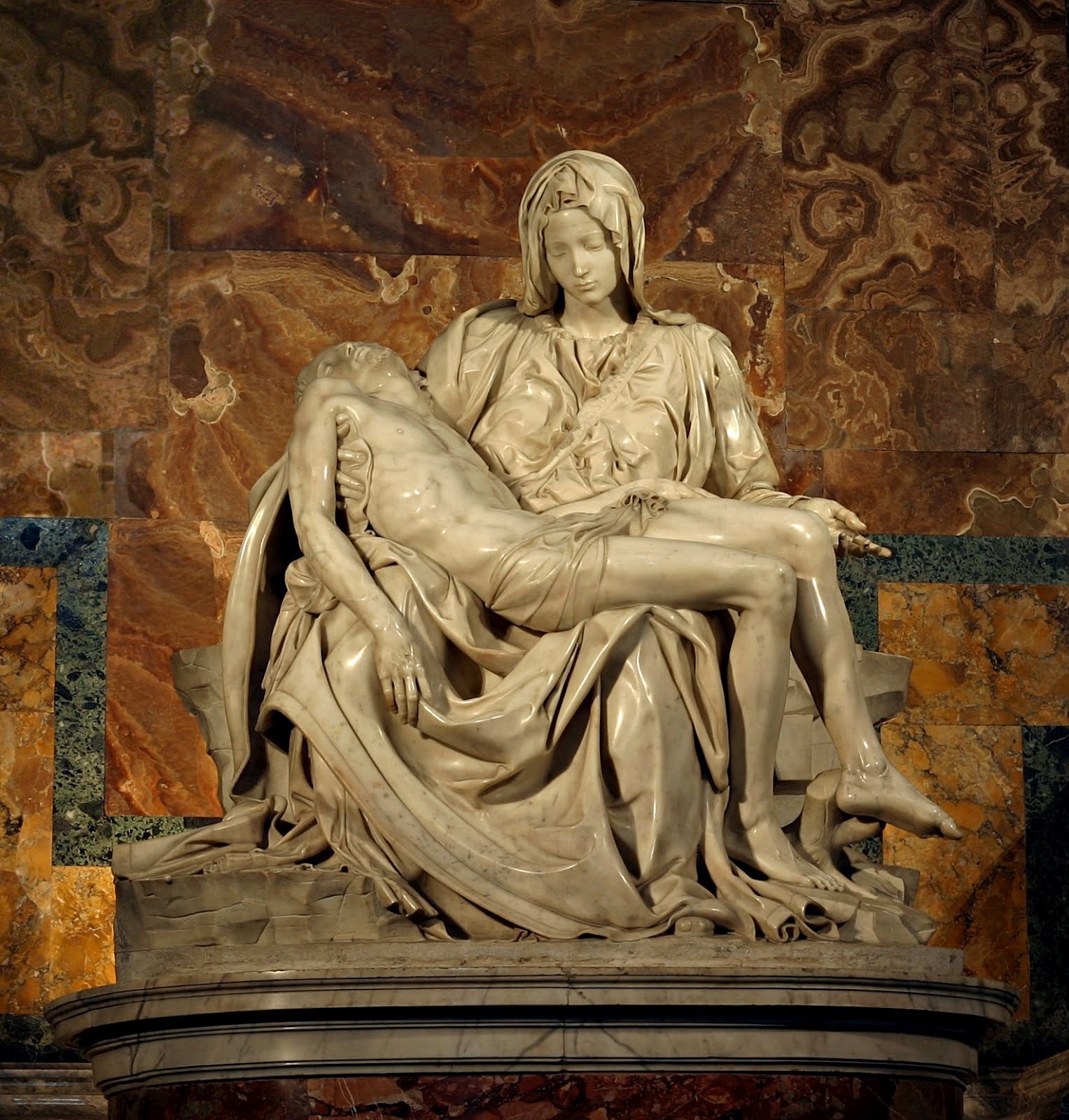

To see a detail from the luminous Stations of the Cross at St. Basil's Chapel at the University of Houston, see here.

Sunday, March 18, 2012

Via Crucis VII: Will I walk past unseeing?


Jesus falls the second time. In the midst of a jostling crowd, the Savior of all sprawls, gasping, on a street corner. He was still there yesterday. Will I walk past unseeing again?


'Let me help. A hundred years or so from now, I believe, a famous novelist will write a classic using that theme. He'll recommend those three words even over 'I love you.' - James T. Kirk in The City on the Edge of Forever

Would I have helped that day in Jerusalem? Will I help now? How? A couple of weeks ago, at the height of rush hour, a man stood frozen on the steps up from the Market-Frankford platform. The crowd flowed around him, almost as if he were a statue, not a person. Not one of us said to him, "Let me help." Not one of us asked, "Can I help?"

It made me think about the Jerusalem to Jericho study described in a link left in a comment on the essay I wrote at This Ignatian Life. It prompting me to reflect about whether compassion is a hobby for me, or integral to who I am. Is helping others something I do if I'm not in a rush, or is my way of proceeding (to borrow a turn of phrase from the Jesuits)? I've been practicing waiting for a while, and slowly it's becoming how I move through the world. Do not run ahead of what you can do, advised Evagrius when it came to prayer, and it's likely good advice here as well.

(And yes, I do know that I'm a geek.)


Photo is from Walwyn via flickr used under Creative Commons license.

Wednesday, March 14, 2012

Via Crucis VI: Become what you seek.


Veronica wipes the face of Jesus. Hands reach out, seeking the face of God, holding it tenderly within hand and heart. Become what you seek.


St. Augustine on the Eucharist: "You are saying "Amen" to what you are: your response is a personal signature, affirming your faith. When you hear "The body of Christ", you reply "Amen." Be a member of Christ's body, then, so that your "Amen" may ring true! ... Be what you see; receive what you are."

What am I reaching for outside of Mass? Does it ring true with what I reach for at the Eucharistic liturgy?

Become what you receive.


A study for the sixth station of the cross by Henri Matisse for the Chapel of the Rosary.

Saturday, March 10, 2012

Via Crucis V: What of the crosses that aren't ours?


They press Simon of Cyrene to bear the cross. Perhaps it is not sufficient to bear only our own crosses, what of the cross thrust upon our neighbor?


I've been continuing to think about my response to the burdens of those around us. I often think about bearing my own crosses, responding to Jesus' in Luke's Gospel: "Whoever wants to be my disciple must deny themselves and take up their cross daily and follow me." This year, I'm thinking more about the crosses that aren't mine, that aren't voluntary. In the comments on the essay I wrote last week about responding to the invisible and marginalized on city streets, someone posted a link to a modern day study of the Good Samaratian. The conclusion drawn in a commentary about the paper, that we are compassionate as a hobby, in other words, when we have time, is one I find challenging, and I'm afraid all too true of myself.

In a conversation with Patient Spiritual Director yesterday, he noted that at one point in his career he was required by his superior to do a particular service assignment once a week. Each week he would internally lament that he didn't have time for this, and yet each week he found it a grace-filled experience. Even the week someone stole his jacket.

I'm reflecting on the press of time, the press of the needs of others, and how I can practice compassion in more than my spare time. Can I pick up the crosses that belong to my neighbor?


Photo is of a 15th century pilgrim's badge, perhaps depicting Simon of Cyrene.

Thursday, March 08, 2012

Via Crucis IV: A second Annunciation. Jesus meets his mother.


Mary meets Jesus. A second Annunciation. She labors again to say, "let this be done according to Your will."


Last night I gave a reflection on two of the Marys of the Lenten Gospels: Mary, the Mother of God and Mary of Magdala. As I prepared, I was struck again by the steadfast strength of the women. They remained. A (very rough) bit from the reflection:

"The mood at the crucifixion had to have been ugly. Peter, a fisherman, “the rock” — hardly a man we imagine couldn't hold his own in a fight, so feared for his life he could not bring himself to admit that he knew the man he left everything to follow, the man he saw transfigured on the mountain top, conversing with Elijah and Moses, of whom he heard it said, “This is my beloved Son.” Surely someone must have have urged the women to leave, wanting to shield them from possible violence, from the scandal — wanting to spare Mary from having to watch her child suffer and die.

But Mary stayed. Both tradition and scripture say she stayed to the bitter end, drinking the dregs of the cup her Son had begged to be spared. This is what she said yes to all those many years ago. To staying. To being a witness to faith and to hope, amid fear and despair. To martyrdom.

I wonder if Mary drew her strength in this moment from the graces that emerged from her years of reflection on the mystery of God made man, not in theory, but within her body, living in her house. She could stay because even the bitter despair of this moment could not erase what was so ingrained in her heart. Her yes. Her son. This was the “fruit” of her contemplations.

We often see Mary through the lens of the story’s beginning. A young girl’s strong “yes” to God, a model of obedience. But at my age, I find myself drawn to the much older Mary – the Mary who would have been in her early 50s. A woman who lived a life of contemplative prayer who could face martyrdom with a "yes" born of that life. Who once before let herself be emptied of Christ, acquiescing again to an even deeper poverty. All a mother's riches, poured out here and now. This is the prayer life I long to have...the poverty of spirit I aspire to."


The fourth station is by glass artist James Ceaser. See the rest of these luminously moving pieces here.

Friday, March 02, 2012

Via Crucis III: The Narrow Way


Jesus falls the first time. This is the narrow way, a steep and torturous path, not metaphor nor allusion, but writ upon earth and flesh.

Monday, February 27, 2012

Via Crucis II: What else is there to cling to?


Jesus takes up his cross. What else is there to cling to now, but the cross?

Friday, February 24, 2012

Via Crucis I: What is truth?


Jesus is condemned to death.

"What is truth?" Pilate asks. The Word that thundered through the void and brought the universe into being stands silent, yet we can still hear the reply: I am the Way. I am the Truth.


Illustration is of a
fragment of a 2nd century papyrus with the text of John 18:38.

Thursday, February 23, 2012

Via Crucis: The Stations of the Cross


The stations of the cross are an ancient devotion, reaching back to the earliest days of the Church when pilgrims would go to Jerusalem to visit the holy places. Small local versions were eventually constructed so that anyone contemplate the mysteries, even if you couldn't get to Jerusalem. There is a physicality to this devotion, the current edition of the Book of Indulgences (yes, such a thing still exists) notes that you don't get an indulgence for praying the stations unless you move from one to the next (exceptions made for infirmity or crowds!). God embodied suffered, so we similarly meditate on the mystery of the Passion with our bodies.

The third week of Ignatius' Spiritual Exercises are a meditation on Christ's passion and death, where the movements are spiritual, and the path is one that moves not only from scene to scene, but ever more deeply into the mystery. I found the third week to be physically exhausting, perhaps because in the end, I sat vigil in the chapel in between meditations. I can remember sitting in my director's office at the very end, clutching my cup of tea and quoting Robert Alter's translation of Psalm 69, "I have entered the watery depths and the current has swept me away. I am exhausted from my calling out. My throat is hoarse. My eyes fail from hoping for my God."

This year the Catholic Standard & Times is doing a meditation on the Stations for the Lent issue. Fourteen stations, from fourteen different churches in the archdiocese, arranged as a pilgrimage across two full pages, with a short reflection/point of contemplation for each station. Writing them led me right back into the currents of the Third Week.

Starting tomorrow and running through Lent, I'll periodically post these very spare meditations, for myself as a repetition of the contemplations that gave rise to them over the last few weeks. Walk with me....


Photo is from Wikimedia commons.