Showing posts with label time. Show all posts

Monday, June 02, 2025

Chasing Down May

A friend noted in an email that the previous week had gotten away from her. Same here, I said. I was chasing the previous week down the street, too. (If you see it, please send it back in my direction!) That's actually an understatement, it's really all of May that has sped past like one of those rapidly flipping calendars in a movie. What happened to May? The answer is what happened in May:

Week 1: I went (virtually) to a conference in Assisi. There was also the small matter of a papal conclave, which I live blogged for the Philadelphia Inquirer, along with four other local Catholics. Oh - and two tea related events. Motto for the week, most of it spent on Rome time: "All the jet lag, none of the gelato." Math Man did take me out for water ice when all was said and done. Habemus papam!

Week 2: There was a wedding! Math Guy, my youngest, got married. There were dinners and lunches. Philly food (more water ice) and family. Despite travel travails, everyone got here and home. We all celebrated the happy couple, we karaoke-ed (is that a verb?) and danced under the disco lights. There were 30 people at my house on the day after. We ate some more and hugged a lot. I definitely cried more than once.

Week 3: Wedding recovery. Whew - could I fit all the stuff from the reception in my Mini Cooper? Props to the staff person at the venue who did not say, "You can't possibly get all that in." I did, including the enormous disco ball which occupied the passenger seat. I chauffeured people to their flights. There was...laundry. Because there is always laundry.


Week 4:
I facilitated two retreat days for staff from Catholic Social Services programs. Respite and reflection for 130 lovely folk, framed around pilgrimages and hope.  Reunion at the college. My students are writing books and talking about them. I talked to alums. I packed up and shuttered my research space after a 40 year run as an independent scientist. I definitely cried again.

It's been a lot. But I am welcoming what I hope will be a gentle June. Hi, June!

________

Photos are of my sibs (The Wookie, The Reverend, The Artisté, my aunt, my sister, Geek Guru, and me. All in our disco best. I am so short.); a plant with a bloom peeking out at the retreat house, hope for sure; and the very first computer I had at the college.

Wednesday, January 01, 2025

Time past and time future

"Time past and time future
What might have been and what has been
Point to one end, which is always present." TS Eliot, Four Quartets

The year of our Lord 2024 faded to 2025 as I climbed out of a hot soaking tub last night. The light was dim, the towel warm and soft. The aches of one year soaked out, the grit of another year washed away. A baptism of sorts. I spent the first minutes of 2025 in prayer, the ablutions an apt way to enter into that time and space.  

This last year has been eventful. Delightfully so at times, and at others presenting new and enormous challenges. In January, Steeped came out and caused a minor brew-ha-ha. (Or perhaps not so minor, the PR people estimate the news was seen more than 19 billion times.) There were many puns. There was a limerick (on Wait, Wait Don't Tell Me). There was a US State department briefing. There have been molecular tea parties. I did a tea and cake meet-up hosted by the Royal Society of Chemistry with Josh Smalley  — a chemist and GBBO finalist. I signed many books. And most delightful of all, I heard from so many former students.

In early April I gave a weekend retreat at a retreat house on the Finger Lakes in upstate New York just before the total solar eclipse. The retreat was a chance to read God's other book with a wonderful group of people  — friends old and new. Despite the clouds that obscured the sun, the eclipse was a moment of awe. 

I wrote about hope in the context of the election and in my own life, and about what made chemists think about putting fluorine in so many drugs. 

In July, on the feast of St. Ignatius of Loyola, I learned that I had Parkinson's disease. For the moment my symptoms are well-controlled and physical and occupational therapy have given me back so much that I had thought lost. May I never again take for granted the ability to sign my name or stir a cup of tea or cut a sandwich in half. Or fold my laundry. I haven't been able to bring myself to watch some of the video footage from the RSC event last summer, it is painful to see how much difficulty I was having. As for the future? It is unknown.

To what end does all this point? When I was studying for my master's in theology, one of my professors said if you were ever stuck in your comps, remember that the answer was always the Paschal Mystery. (This, I would like to point out, was no help at all when I failed to remember the dates of the minor prophets.) Passion, death and resurrection, a triplet of mysteries, all arising from the incarnation. Or if you'd rather, the mysteries of beginnings and endings, joys and pains. Woven together by threads of hope and wisps of grace. Everything points here.


Friday, August 04, 2017

Arboreal alarm clocks

I walked down the driveway yesterday morning, the cicadas howling in the humid air.  Classes, you need to get ready for classes. Their fall alarm seems so much louder when you've been away. This year, after a cicada-less stop in California, the sounds of summer fading to fall feels like an alarm going off at 3:30 am for an early flight, rousing me from the deepest of sleeps.

Usually the end of the summer creeps up slowly. The cicadas hum, the air gets misty, the leaves on the trees wrinkle ever so slightly, their spring greens grow dusty and faded.  The garden begins to look a bit spent.  I don't need my calendar to tell me summer is waning (though one of the astronomers at the Specola kept saying, "July is going to be over, it's going to be the 8th month of the year."  He was aghast at how the year had flown.  Me, too.)

It's been a good summer, with stretches of time for thinking and writing, time to explore some new projects and finish off old ones. There was time with family (wedding!) and time to tidy.  A bit of retreat time.  Time seems more expansive, perhaps because of the longer days, or perhaps because they are less hectic, more predictable.

And for the record, there is a full month of summer left before I begin teaching.  If only I could hit snooze on the cicadas, and blissfully go back to my midsummer's dreams.


Saturday, March 26, 2016

Entering the torrents of time

It’s evening. The pastor reads the prayers from a Roman missal balanced precariously on the hands of an altar server, the wind rifling the corners of the pages, “Christ yesterday and today, the beginning and the end…all time belongs to him and all the ages.”  As the incense pierces the beeswax of the Easter candles, these words probe the wounds of my disbelief.

Make no mistake, I believe in Christ, Eternal God from Eternal God, risen from the dead, coming in glory. My problem lies here:  time is God’s. Too often time seems to be a demonic presence harrying me from one end of my day to the other. Or it is a raging torrent that batters my heart, dragging me along when I would instead cling to the babe in my arms, or hold tight to the teenaged boys clowning in my kitchen. Even as I follow the candle into the dark church, I struggle to accept such forces could cut channels of grace.  To chant in gratitude, "Thanks be to God."


Yet here it is again, in the first reading. The Spirit swept over the darkling waters, and the Word set the universe aflame.  Time was cupped for a moment in God’s hand, then poured forth. There was morning and evening. And all the days since. It dawns on me that time is not a flaw in creation. It points me toward a God who let go what was clenched in his hands, chose to throw himself into the torrents of time with us, and promised never to leave. To this, I say amen.  Alleluia.


A version of this reflection appeared Give Us This Day for the Easter Vigil

Thursday, January 16, 2014

Garlic and sapphires in the mud

Used under a Creative Commons License.  c. John Arnold
[The last bit of this is a much redacted piece of the reflection...]

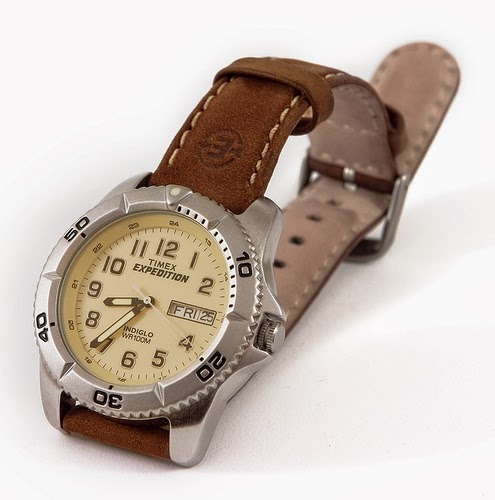
Last night I gave a reflection at a local retreat house for their annual blessing of calendars and clocks. It is a lovely custom, starting with a simple dinner. Soup and bread, cookies and tea. As we moved into the chapel after dinner, people began coming up to the foot of the altar and leaving their planners and calendars on the steps, stripping off their watches and setting them on top. Here, in front of the tabernacle, we moved from chronos to kairos, not just in mind, but in body. We literally stripped ourselves of the things that which mark and measure, cajole and contain counted time for us.

As I stood in front of the altar and set down my calendar and took off my watch, I had a moment of angst. I wanted to say to God, "You want what?" My watch? How would I keep track of the time when I spoke? Mind you, I have a prepared text, and no tendency to stray far from it. At 1500-ish words, it's a 12-15 minute reflection.

Despite the two angels sternly guarding either side of the altar, no divine help was apparently forthcoming. No cherubim appeared to peel off my watch and bear it with glee to the altar. No seraphim stood before me and boomed, "Step away from your time piece." I just had to. Take. It. Off. And walk away.

I will admit to having a somewhat fraught and fragile relationship with time. As a scientist, I know something of time and how it measured by clocks and by calendars. One second, the time it takes for a particular atom (Cs-133) to move between two states 9,192, 631,770 times. Exactly 9,192, 631,770 times. The very atoms from which we are made are ticking clocks.Less than one half-life of C-14 has passed since a man named Jesus, the Nazarean, hung on a cross on a hill on the outskirts of Jerusalem. As a person of faith, I get that God set time into motion with the creation of the universe. But time and I are still at odd with each other more often than not.

In an article written ten years ago in America, Jesuit Dennis Hamm suggests praying not just over, but with, one’s calendar in hand, as part of the Examen. I’m going to admit that when my spiritual director first suggested this, my reaction was visceral. After a crazy day, the last thing I wanted in my prayer space was my calendar. I wanted to meditate on the eternal, to sink into the vast stillness of God. Not contemplate the to-do list that chases me from one end of campus to the next. No. No way.

But my ever patient director kept gently suggesting it. At first I couldn’t even open the thing, it would sit on the carpet in my prayer space, where I would watch it carefully. Would the demons trapped inside fly out if I cracked the cover? Gradually I found the courage to open the @#$$% thing, and found that praying with my calendar helped me discover the moments of consolation, that even if I appreciated them in the moment — the uninterrupted lunch, the walk from one building to the next, the student who finally figured out the tricky titration proclems — by the time I reached the end of the day, were lost in the evening maelstrom of dinner making, homework and lecture preparation.

Crash calls once a week, via Skype from WJU (Wonderful Jesuit University), and when I ask “How has your week been?” he pulls up his calendar and uses that to prompt his memory. I’m delighted to be welcomed into his life, to walk along with him, through both the quotidian — the math test, finding a barber to cut his hair — and the memorable — he spoke to Madeleine Albright, he got into the class he really wanted to. To hear what he thinks these events mean, and a chance for him to ask me for what he needs. Books and key deposits. Calculus help.

I wonder if God takes equal delight in my invitation to be welcome within my calendar, my days, the seconds he set the beat for? As happy to hear how I feel about my finally getting the laundry not only done, but folded and put away, as He is to know that I went to Mass this morning. To know where I might have encountered “Garlic and sapphires in the mud."

My relationship to time is still a complicated one, but there are blessings here, year round. But God, can I have my watch back now?

Wednesday, January 18, 2012

Billy Collins on lanyards and helminthology


I'm reading Billy Collins' The Trouble with Poetry. I love the rich imagery and dashing snark that characterize Collins' poetry -" The Introduction": "And you're all familiar with helminthology? It's the science of worms." It's good commuting reading, there's time to make friends with a poem or two on each leg of my journey. Beside the seriously refusing to take itself seriously "The Introduction" the collection includes "The Lanyard":

No cookie nibbled by a French novelist
could send one more suddenly into the past —
a past where I sat at a workbench at a camp
by a deep Adirondack lake
learning how to braid thin plastic strips
into a lanyard, a gift for my mother.

That stanza gave me a Proustian push into the past as well. I can see the picnic bench set out at the summer rec program, the spools of plastic strips, smell the warm blacktop and feel the whisper of my seersucker sundress in the early morning breeze that still held a touch of the cool of the night. I can't remember how many of these I made, and as far as I know none survived, but I can remember my delight when I mastered a spiral form, rather than the simple square. I wondered if kids still made these, or if like the translucent plastic flowers we made by dipping wires into a solution that smelled like my dad's lab, they were creations of memory only.

Yes, they are still made. The stuff from which they are made is called by some gimp, the craft itself is called boondoggle or scoubi. Apparently it's recently been a rage in the UK to make zipper pulls from it. It sounds more useful than my lanyards.


Photo is from Shutterstock. Used with permission.

Saturday, December 31, 2011

Reflecting 2011


As I've done the last two years, I've dumped the text of the blog into a word frequency analyzer (Wordle) and made a word cloud. I'm struck by the consistency of my writing. Total words on the blog this year? 64840 Last year? 65299! 172 posts. God appears 297 times, prayer and its variants at 257. Last year's numbers are eerily similar, 311 and 258, respectively. I'm on message.

As one that longs to see God in all things, I'm amused that see is embedded in God. And I'm enjoying the accidental co-location of God's and Crash, which I can read several ways. Crash surely is God's (as I've written here, a column I was thinking about today when Crash again bore the cross into Church on a Marian feast). But in this season, where God crashed into time, I prefer to read it as a metaphor for the Incarnation.

And on what other blog might you find the words synchrotron and refulgence both in play?

Happy New Year!

Wednesday, August 10, 2011

Column: Tangling with time

Time is still all knotted up here. The peach marmalade remains a marvel -- a moment of summer held captive, a half-dozen jars of the color of the sunset sit on my dad's counter waiting for me to take them home. Uncle Norb has passed away at 93; the weekend's family BBQ party now follows a Friday funeral. I'm writing out of Lent, penance on my mind.

This column appeared in the Catholic Standard & Times on 11 August 2011.

For everything there is a season, and a time for every matter under heaven. — Ecclesiastes 3:1

For most of this summer I have been working off the clock. Somewhere in early June I stopped wearing my watch unless I had an appointment to keep. Now it’s August and I can’t figure out where I put it.

Quarks, the tiny particles from which the universe is constructed, come in six flavors. As a scientist, time always seems less complicated to me than matter: There is only one sort of time, and it marches in a single direction. In my heart, I know this can’t possibly be true.

Time has flavors, some bitter, some sweet. Watches and clocks purport to measure it, but their fixed rhythms never seem to quite match the meter of my life. Time is not a single strand, but a loose tangle of threads. It’s August, I’m at my dad’s for a family reunion, while my mind wanders through next May to write a reflection for the feast of St. Athanasius.

St. Augustine wonders about the tangled nature of time in his Confessions. “For what is time? Who can easily and briefly explain it?” We agree on a way to count time, but are hard pressed to explain to each other how time works. We experience the present moment as a breath between past and future. God is eternal, ever-present, alive in a present that doesn’t require the past and the future to hold it in place. God holds all our time lines in His hands.

When I reflexively glance at the clock, I tie myself to human time, an agreed upon ticking away of seconds. Working on God’s time keeps me looking toward a time that doesn’t push and pull me to the next task, but takes its cues from the eternal.

Living without my watch has encouraged me to notice the many ways time tastes. This morning I stole out of the blossoming chaos at my dad’s, taking my writing to an abandoned lath house on the edge of the south pasture, hidden beneath years of weeds and spider webs. Now the wind has just begun to rustle in the feral rosebushes that shelter me, while a cold-slowed lizard that looks like it was carved from the weathered wood of the floor shuffles into the sunshine that laps at my improvised desk. The moment has the flavor of noon — time to return to the bedlam at the top of the hill.

My prayer time is off the clock this summer, too. Morning prayer comes with my first my cup of tea, whether that’s 7:30 a.m. before the gaggle of teenagers have slunk from their beds, or 11:15 on a morning that felt like I tumbled out of bed into a roller-coaster car.

I’m more attentive to God’s call to prayer where and when I am: as I help my dad lift my 93-year-old uncle out of his chair, make peach marmalade with my 9-year-old niece, or listen to my brother Gene talk about his work as principal of a local middle school. It’s a way of prayer that willingly entangles itself in the times — and needs — of others.

I’ve stopped watching my watch. In fact, I’ve stopped looking for my watch. While summer lasts, I’m just watching.


Father, yours is the morning and yours is the evening. Let the Sun of Justice, Jesus Christ, shine forever in our hearts and draw us to that light where you live in radiant glory. Amen. — Closing prayer, Evening Prayer, Tuesday Week II

Monday, August 01, 2011

Entangled in time


I'm going to admit to being not quite oriented x3 (to person, place and time) these days. Time feels like a loose tangle of threads, not a smoothly running line. Just in the last week, it's been August, and I'm off to see family. It's been September, and I'm prepping a lecture for quantum chemistry. It's November and I'm writing about running the holiday rapids. It's been (last) April and I'm giving a talk on contemplative practices. It's been (next) May and I'm hearing the readings and prayers for the feast of St. Athanasius.

I cantored on Saturday for the vigil Mass. Earlier in the week I'd prepped by reading the psalm in the context of the other readings. The second reading is on my top ten list of all time, so I spent more time in that space than in the Gospel, but I did read the text, I know I did. But by Saturday, I had fast-forwarded to May, immersed in those readings for Athanasius (Acts 12:24-13:5/Psalm 67/Jn 12:44-50). I chanted the Gospel acclamation (with the correct verse), turned and faced the ambo and....was startled, nigh on shocked, to hear Matthew's story of the loaves and fishes proclaimed. I was expecting to hear John.

The struggle to place the Gospel actually let me hear the familiar words afresh. I wonder if tying myself too tightly to time with ordos and calendars stunts my ability to hear what is new and alive in words familiar and worn. Surely when I say, "I love you." to Math Man, I don't mean what I meant 20 years ago? or yesterday? or tomorrow?

______
Why St. Athanasius? I'm writing a reflection for this feast for Liturgical Press' Give Us This Day - first issue is today!

Monday, July 25, 2011

Time will tell - or not


After realizing last summer how much having clocks in my face created an artifical sense of urgency, I made a conscious effort to keep them out of sight. I turned off the clock in the corner of my computer screen, take off my watch unless I have a reason to wear it, and have moved the clock off my physical desktop as well.

I really didn't need to know what time it was as often as I looked to see what time it was. I watch the clock when I teach, I wear a watch when I have an appointment (or set an alarm), but most of the time I can be "off the clock." And more and more I'm choosing that option.

Last week Math Man had some minor surgery done. There's a lot of waiting involved, but once you are there, no real need to know the time. It takes what it takes, as my mother might have said. At one point, I looked at my wrist, wondering what time it was, only to realize (1) I had been writing before we left, so wasn't wearing it and (2) I didn't need to know, they'd be done when they were done. It was just a reflex. (And it's clearly a hard habit to break. I've been trying for a year!)

Somewhat counterintuitively, I tend to wear my watch more often on retreat. Meals, Mass, meetings with my director -- none of these are good to miss, and unlike at home, no one is going to come looking for me for the first two. Still, on principle I prefer not to use my watch for prayer, but instead set a timer (I have a lovely virtual meditation timer on my iPad). On retreat at Wernersville last month it was hot (though not as hot as it's gotten lately) and my favorite spot for prayer in the chapel (third floor balcony) was unbearably hot. Instead I went outside and lay on the grass near the eastern cloister, looking up at the midnight stars.

The second night I went out there, I realized that I'd forgotten my iPad with the timer and wasn't wearing my watch. I thought about going back to my room to fetch a timing device, but given that my knee was seriously unhappy about stairs and taking the elevator at that hour threatens the peaceful sleep of those whose rooms are nearby, I decided to simply stay until I was done and trust that I would take the customary hour.

As I lay there, I realized that the constellation that had fed my contemplations of the previous night was once again overhead (the heavens do run like clockwork). I remembered that as I had finished, the constellation was just edging out of my sight behind the cloister roof. And so I let God's clock time my prayer, aware again of God turning my face toward the immensity of creation, letting one more strand fall from my hands.


You can watch me talk about unplugging during the Spiritual Exercises and afterwards here. Click on the square with my name (and find out how old I am).

The column I wrote about watching the night on retreat last year is here. And if you want to see a magnificent photo of the night sky at Wernerville, check out Robin's vignettes of her retreat.

Monday, March 28, 2011

Silent notes


The deep sense of release when I unbuckled my watch, getting off the clock bound to my wrist and diving into a more timeless existence. I'd just finished celebrating the sacrament of reconciliation with my confessor, so the next time I needed to be anywhere was 11 :45 the next morning (for Mass, lunch and and appointment with Patient Spiritual Director). Absolution and the temporary respite from the tyrant of the clock, commingled relief.

The almost riotous outbreak of spring. The grass had a lively spring, the birds were warbling cheerfully, the sun was warm on my back as I walked down the hill toward the cemetery. Hard to imagine I would wake in a day or two to a car dusted in snow.

Sinking deeply into writing a reflection on the Liturgy of the Hours, tucked into a corner of the Library, so silent I could hear the pen scratch on the paper. Prayer soaked work.

Saturday, October 23, 2010

Wrinkled Time

I feel quite wrinkled at the moment, after a mere twenty-four hours of travel (two more hours to go). The little screen in the back of my seat shows us to be over the Bay of Bengal. What am I doing on the other side of the earth? It seems odd to get here by just sitting, as difficult as that can seem in quarters so tight that I can't put my laptop screen all the way up when the seat in front of me is reclined. With virtually no effort on my part (if you don't count the sudden swirl of errands that renewing my passport required), I'm about to arrive in a place that five hundred years ago was essentially inaccessible from where I live now. How long, I wonder, did it take for St. Francis Xavier to get to this end of the earth from Rome in 1541? [Months, I looked it up when I landed.] And do I have more stuff or less than he brought along?

Time feels a bit wrinkled, too. I prayed Compline on the plane from Philly to London in the middle of the night. But by the time I was settled into the next plane, now on Singapore time, it was time and past for Evening Prayer. Time had bunched up, and folded over.

But I can once again keep time, having managed to replace my watch during the London layover!

Saturday, September 18, 2010

Radio waves

I was listening to the radio this afternoon as I unloaded the groceries from a pilgrimage to the huge (and I mean huge!) grocery store about half an hour away (catering to the family's taste for a particular soda that you can't find anywhere in Pennsylvania).

I'm almost done when Barnacle Boy bounces in the door with Frisbee Friend. "Are you listening to the radio?" he demanded. Uh - what else would be belting tunes from the 70s and 80s in the kitchen? Then I had a moment of cultural shock. It seemed obvious to me that the music would be coming from the radio -- that's the default. But to the Boy, there's many more possibilities: iPod playlist playing through the speakers on the radio, Pandora, YouTube...

I remember playing with a radio much like the one in the photo at my paternal grandparent's house. It was huge, built into a cabinet about the size of a modern big screen TV. The bass notes of the carrier hum seemed to make my very insides vibrate.

Thursday, July 08, 2010

Column: What if night were a place and not a time?

I watched the night descend sitting on a bench at Eastern Point on retreat this summer. The sense of being intentionally and inexorably turned away from the sun to look into the depths of the universe was strong. A bit from Benedictine monk David Steindl-Rast ran through my mind as I sat there: "There is a mysterious woundedness that somehow goes with great blessing. When we truly encounter the night in all its beauty and terror, we have no assurance whatsoever that we are going to come out unscathed."

If I could write fiction, I'd write a short story about visiting the night....

This column appeared in the Catholic Standard & Times 8 July 2010.


By day the Lord ordains His kindness and by night His song is with me — prayer to the God of my life. Ps 42:9

What if the night were a place and not a time? What if you wanted to see the stars you had to walk to the night side of the earth? Would we ever go? Could we ever look? Would we stay very long? Or would we peek over the edge and depart as quickly as we could?

I had gone out to sit on the beach as the sun set. The bench faced east, not west, so instead of watching the fiery exuberant swirls of red and gold over the bay, my view was one of an impending darkness extending further than I could see. The blue of the clear sky slowly deepened, the stars came into focus.

As I sat, I could sense the earth spinning in space, the planet’s face — and ours — turned once a day toward the vastness of space. We look out into the universe each night whether we wish it or not. It reminded me of when Chris was young and wanted to be certain of my full attention. He would take my face in his hands and turn it toward his.

Does God turn us to face the immense once each day so that we will have to look into the depths of eternity? Did he touch the earth and set it spinning like a top so that we must see where we came from, where we are going? To be assured of my full attention? What does He want me to see?

Suddenly the sunset feels like a distractingly noisy party, the rise of the night, like walking out the door into a quiet and still street, where you can hear the cicadas and the breeze in the trees. In his commentary on the translation of Psalm 42, biblical scholar Robert Alter notes that while this verset is often read as our response to God for His goodness, our song to Him in the night, the Hebrew implies that God also sings to us in the night. What do I hear in the quiet streets of night, where God sings to me?

In the stars whose light is so strong we can see it at inconceivable distances, I hear of my powerlessness and God’s strength. No light that I can kindle will ever compare. There is a taste of eternity in these photons first sent streaking across the universe years ago that touch me only now. As it was in the beginning, is now and ever now shall be. I feel God’s timeless hands on my face, seeking my attention, seeking me.

I wonder if this is what God wants to sing to me this night, of a poverty of spirit, of an emptiness into which he can set His works afire? Is this the place that Johannes Baptist Metz calls “the meeting point of heaven and earth, the mysterious place where God and humanity encounter each other, the point where infinite mystery meets concrete existence.”?

In my world, night is perhaps more of a place, and less of a time. I could back away from that spot on the edge of the night where I could begin to see and hear and touch my poverty in the face of God’s infinite richness by flipping on the light, or by walking back into the house. What do I risk by staying?

An emptiness into which God can set His works aflame in me, like the stars of the sky? Will I go?


May God shield me;
May God fill me;
May God keep me;
May God watch me;
May God bring me this night to the nearness of His love…the peace of all peace be mine this night in the Name of the Father and of the Son, and of the Holy Spirit. Amen.

— Closing prayer for St. Patrick’s Compline, Celtic Daily Prayer: Prayers and Readings From the Northumbria Community

Wednesday, February 10, 2010

Column: Seeking a measured tempo

This column began as a post from a couple of years back. Patient Spiritual Director had told me that the desert fathers and early monastics considered "overwork" to fall under the heading of the deadly sin of sloth, which seemed to him surprising. But given sloth's roots in acedia, the draining away of prayer through inaction, I can see the connection. Prayer can vanish into the whirlwind of action, too. It's all about tempo...

This column appeared in the Catholic Standard & Times on 11 February 2010.

In vain you get up earlier, and put off going to bed, sweating to make a living, since He provides for His beloved as they sleep.

— Ps. 127:2

Acedia, what the desert fathers called the noontime demon, baked the life of out of a monk’s prayers, leaving the day to stretch emptily before him, the hours passing with syrupy slowness. In my life, sloth’s succubus stamps in the door in February, and is nowise as gentle.

It’s cold, dark and damp in the world. The semester seems to stretch endlessly ahead of me, and the crisp breezes of energy and hope that swept through my office in September have become a howling blizzard of commitments and complications. I despair of finding my desk again.

My perfectionist alter ego huddles in the corner, muttering dark comments about my work, trying to goad me into polishing this task or that, to the detriment of those in the ever-growing queue. It’s not the heat that shrivels my prayers; it’s the demands of the day that suck the life from my soul. I long for a desert hermitage — preferably one occupied by someone else’s demons.

Unable to escape to warmer climes or a hermit’s cell, on a bitter cold Friday, I found myself making soup. Soup demands my full attention, perfection is forced to take a back seat to completion — driving off the demons of demand.

Heaps of roughly cut vegetables grew on the cutting board, then were cast into the pot. One layer followed the next, the flavors intensifying in the confines of the pot. The individual chunks finally surrendered to the blender, and what had 30 minutes previously been unscrubbed carrots and onions buried in the vegetable crisper was gloriously whole and sustaining. I filled my bowl, to find I was no longer hungry. The mere act of making the soup had left me fed.

A few days later, I went to Morning Prayer. The psalms began, each side’s words piling up until they slid into the silence and the other side took up its work, layering on top of the previous strophe. The intensity gradually built, our voices created a complex harmony. We followed the antiphonarian into the depths of the Benedictus, suddenly whole.

There we all were, like my soup; the ingredients ordinary, perfection a hope not an expectation, gradually cooking down into a fragrant and complex whole. Here again, I was fed not by the results, but by the work itself.

In neither case was the end product of prayer or stove my only recompense. As C.S. Lewis points out in “The Weight of Glory,” “The proper rewards are not simply tacked on to the activity for which they are given, but are the activity itself in consummation.”

The psalms are not effective only as pleas for God’s eventual grace but, like the steam of the soup that eased the winter dryness of my kitchen, are breathed in to gently renew the soul in that very moment. The mere undertaking of these prayers, as the making of soup, is healing.

I wasn’t surprised to find fifth century desert monastic Amma Syncletica’s prescription for dispelling the soul-draining demons of perfectionism: “This spirit must be cast out, mainly by prayer and psalmody.” Both soup and psalmody keep me to a rhythm, beating out a pace that is neither too slow nor too fast.

When the pace of my life tries to distort time, excruciatingly stretching it out or compressing it until I gasp for breath, the psalms bring me back to a more measured tempo.

Soup-making and psalm-singing remind me not to confuse frantic busyness with productivity. Some things only yield their full flavor when cooked slowly.


To God whose power now at work in us can do immeasurably more than we ask or imagine — to him be glory in the church and in Christ Jesus through all generations, world without end. Amen. — St. Paul to the Ephesians

Tuesday, November 25, 2008

How can I help?

...is what Barnacle Boy asked me in the car today. I hadn't even asked for his help getting ready for the big holiday feast, but there he was, all ready to be deployed in the cause.

If only he could grade quantum chemistry problem sets!

Tuesday, June 10, 2008

Off the clock


The tolling bell
Measures time not our time, rung by the unhurried
Ground swell, a time
Older than the time of chronometers, older
Than time counted by anxious worried women
Lying awake, calculating the future,
Trying to unweave, unwind, unravel
And piece together the past and the future,
Between midnight and dawn, when the past is all deception,
The future futureless, before the morning watch
When time stops and time is never ending;
And the ground swell, that is and was from the beginning,
Clangs
The bell.

T.S. Eliot - The Dry Salvages
On the first day of June I took off my watch - and haven't put it back on. And turned off the time on the front of my cell phone. I'm floating free of time, at least as much as you can in this day and age.

The time is everywhere, as it turns out. In my study upstairs the time is displayed in five different places: a clock on the wall, a clock on the kids' desk, a clock on the printer, a clock on the desktop computer, a clock on my laptop computer. If I wanted to dig for it, I could also find the time on my iPod. I can watch time fly without a watch.

The lack of a watch has made me both more and less attentive to the time. I'm more attentive to alternative cues (the kids coming home from the neighborhood school - must be 3:30). I'm less worried about what time it is when I'm talking to someone, or taking a walk, or driving.

I'm in the midst of writing a piece about ignoring time...which ironically has a due date. Back on the clock!